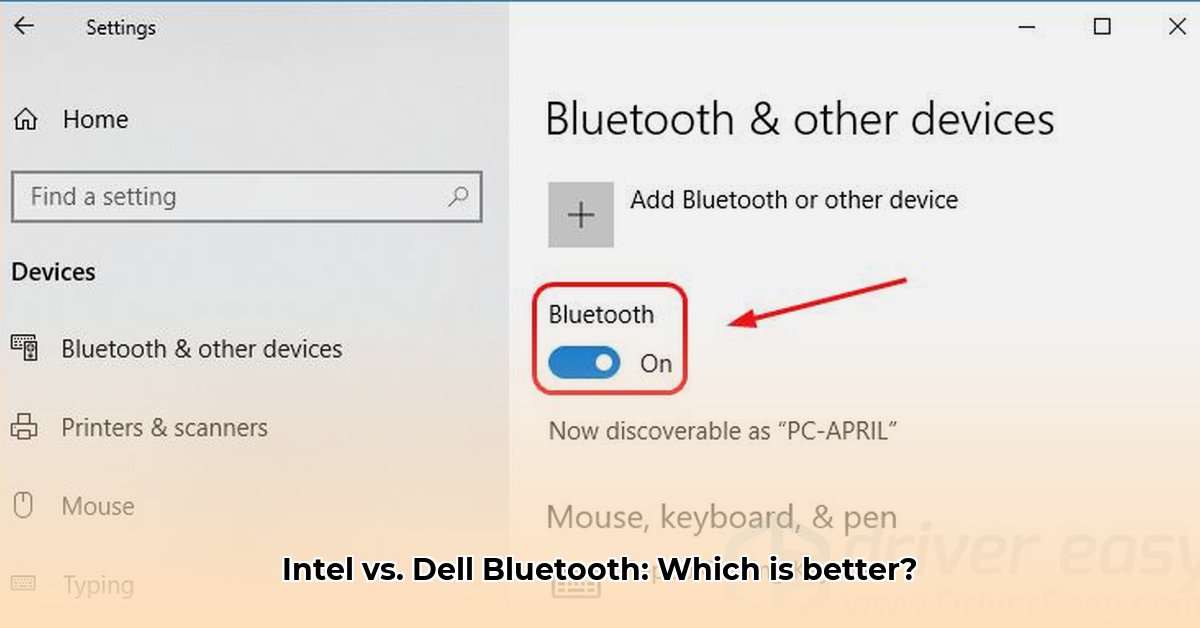
Getting your Bluetooth working on Windows 11 Pro involves choosing a driver, a decision with significant legal implications. This article compares Intel and Dell Bluetooth drivers, analyzing their license agreements to help you make an informed choice. We'll clarify the key aspects in plain English, guide you through safe downloads, and highlight potential risks. Whether you're a tech expert or simply need to connect your headphones, this guide will help.
Decoding the Driver Download: Beyond the Click
Downloading a Bluetooth driver involves accepting a license agreement, often overlooked but crucial. These agreements define your usage rights and the vendor's responsibilities. Intel and Dell, both offering Windows 11 Pro-compatible drivers, approach these agreements differently. Understanding these differences is vital for informed decision-making. Have you ever considered the legal implications of a seemingly simple driver download?
Intel employs a formal, comprehensive legal contract. It meticulously details permitted uses, liability limitations (surprisingly capped at $100!), and dispute resolution processes. This approach strongly protects Intel's intellectual property. In contrast, Dell's approach is less formal, prioritizing straightforward installation instructions and warnings over a detailed legal contract. This difference likely reflects their distinct roles: Intel manufactures Bluetooth chips; Dell assembles computers. Therefore, their priorities differ significantly.
Head-to-Head: Key Differences in a Nutshell
Understanding the nuances of each driver requires a side-by-side comparison. What are the important details you should keep in mind?
| Feature | Intel Bluetooth Driver | Dell Bluetooth Driver |
|---|---|---|
| License Agreement | Formal, detailed legal contract | Less formal; integrated into installation instructions and warnings |
| Liability Limits | Explicitly stated, limited to $100 | Implicit; likely subject to broader legal precedents. |
| Dispute Resolution | Formal process outlined in the agreement | Less structured; likely handled through standard customer support |
| Third-party Software | Possible inclusion; specifics undefined in agreement | Implied presence; responsibility not explicitly defined |
| Download Source | Intel's official website | Dell's official support website |
| Installation Ease | May require more technical knowledge due to agreement complexity. | Generally simpler; user-friendly steps are emphasized |
| Legal Protection Level | High; agreement thoroughly outlines rights and responsibilities. | Lower; relies on general legal principles and customer support. |
Your Step-by-Step Guide to a Secure Download
Regardless of your chosen driver, these steps will ensure a safe download:
- Verify the Source: Download only from the official Intel or Dell websites. Counterfeit sites are a significant malware threat.
- Read the Fine Print (Intel): For Intel, thoroughly read the license agreement before installation. For Dell, focus on the installation instructions and warnings.
- Follow Instructions Precisely: Adhere strictly to the provided installation instructions. Deviation may lead to issues.
- Maintain Updates: Regularly update your Bluetooth drivers for optimal performance and security.
Potential Risks and Mitigation Strategies
While official downloads minimize risk, awareness of potential problems is essential. Unofficial sources dramatically increase your malware risk. Always stick to official channels. Even official drivers sometimes bundle additional software – research any unfamiliar programs before execution. What is the most frequent cause of Bluetooth issues on Windows 11 Pro laptops?
Choosing the Right Driver for You
The ideal driver depends on your priorities. Intel provides a robust legal framework, offering clear protections. Dell prioritizes ease of use and straightforward installation. Consider your comfort level with legal documents versus ease of setup. The choice is yours; making an informed decision starts by understanding your priorities.
How to Compare Intel and Dell Bluetooth Driver License Agreements
Understanding the legal nuances of your Bluetooth drivers requires examining both Intel and Dell's licensing approaches. While both allow driver usage, their methods are starkly different.
Unpacking the Differences
Intel offers formal legal documents. Dell integrates licensing information within installation instructions and support documentation – a less formal approach. Comparative analysis requires accounting for these distinct formats.
Key Distinctions: Side-by-Side Comparison
| Feature | Intel Bluetooth Driver License Agreement | Dell Bluetooth Driver License Agreement |
|---|---|---|
| Format | Formal legal document | Less formal, integrated within installation/support documentation |
| Liability | Usually includes specific liability limitations | Often less explicit, relying on general terms and disclaimers |
| Intellectual Property | Clearly defines intellectual property rights | Less detailed; adherence to copyright laws is generally implied |
| Dispute Resolution | Typically includes clauses on dispute resolution, often arbitration | Less structured dispute resolution; usually utilizes support channels |
| Accessibility | Readily available as a separate PDF, often near the driver download | Often integrated with setup instructions; may require careful review of documentation |
Crucial Points:
- Intel's agreements are comprehensive, detailing liability, intellectual property, and dispute resolution.
- Dell's approach is less formal, incorporating licensing within installation steps.
- Always download from official websites to avoid malware.
- Carefully reviewing all licensing information, whatever the format, is crucial.
Navigating the Legal Fine Print
Comparing these agreements requires understanding both permissions and exclusions. Examine liability limitations, software ownership, and dispute resolution. Consider your recourse if problems arise. These are crucial aspects, even if hidden within legal jargon.
Practical Steps for a Thorough Comparison
- Locate Documentation: Find Intel's official license agreement and Dell's documentation (installation instructions and support pages).
- Focus on Key Terms: Pay close attention to liability disclaimers, intellectual property rights, and dispute resolution mechanisms. Note any included warranties and their limitations.
- Create a Comparative Analysis: Use a table (like the ones presented) to highlight crucial differences. This clarifies the fundamental distinctions between the two approaches.
Ultimately, the "better" driver depends on your preferences. Intel's formal agreement provides clarity and predictability. Dell's integrated approach offers simplicity, prioritizing ease of access over comprehensive details. Choose the option that best aligns with your priorities.
⭐⭐⭐⭐☆ (4.8)
Download via Link 1
Download via Link 2
Last updated: Monday, April 28, 2025